
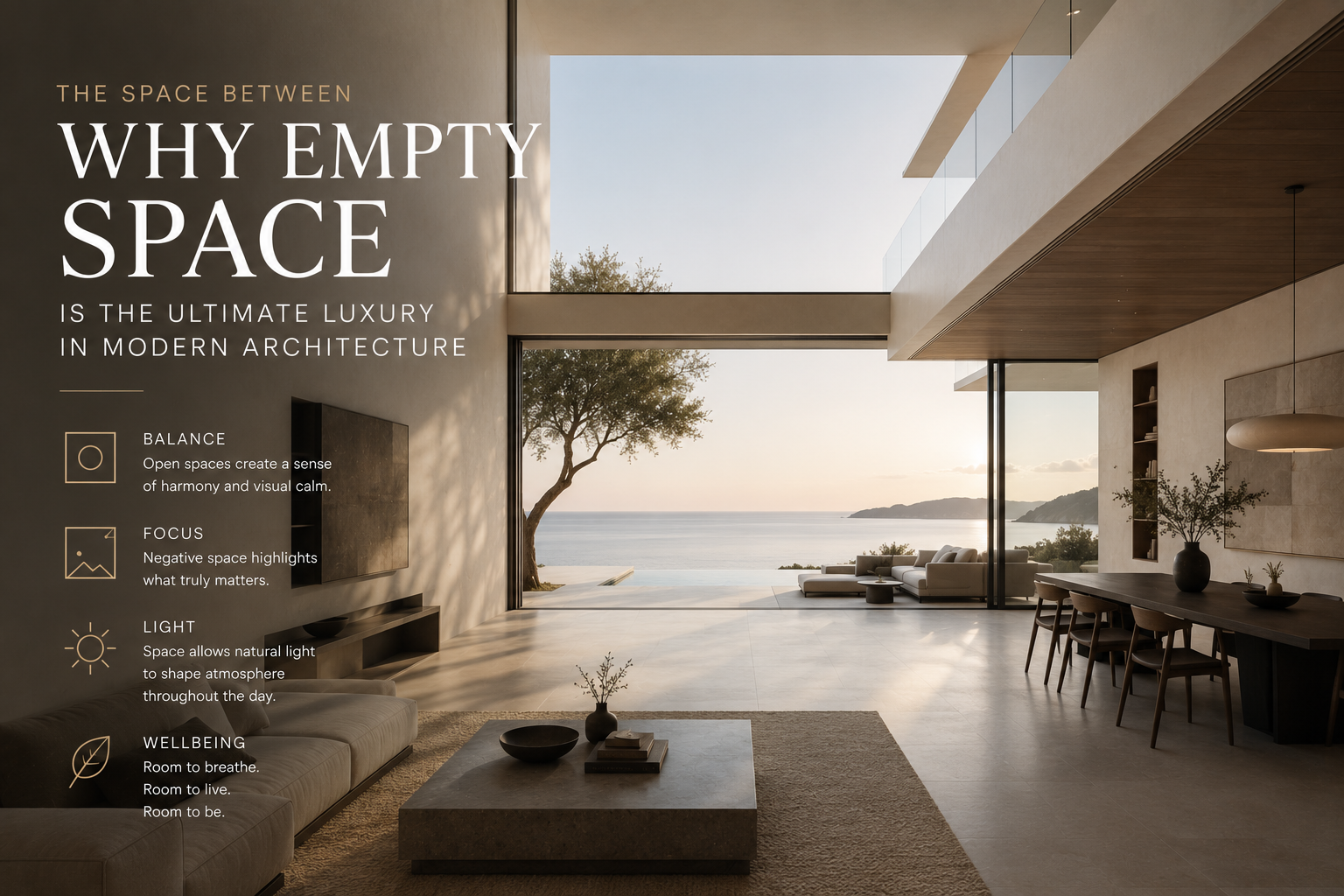
When people imagine luxury, they often think of grand materials, statement furniture, or impressive architectural features. Yet one of the most powerful tools in luxury architecture and interior design is something far less obvious: space itself.
In exceptional homes, what is intentionally left empty can be just as important as what is built. Architects refer to this as negative space—the deliberate use of openness to create balance, focus, and a sense of calm. Rather than filling every corner, the world’s finest residences embrace restraint, allowing architecture, light, and materials to speak for themselves.
This philosophy is becoming increasingly influential in high-end residential architecture. Wide circulation areas, uncluttered sightlines, double-height voids, and carefully framed views give homes a feeling of generosity that cannot be measured by square metres alone. These moments of openness create rhythm throughout a residence, transforming movement into an experience rather than simply a pathway.
In luxury interior design, negative space enhances the impact of every carefully selected element. A handcrafted dining table, a sculptural staircase, or a bespoke artwork gains greater presence when surrounded by simplicity. The absence of visual clutter allows craftsmanship and proportion to become the focal point.
The most memorable homes are not those that contain the most—they are those that know when to stop. By designing with intention rather than excess, architects create spaces that feel timeless, emotionally restorative, and deeply sophisticated.
Ultimately, true luxury is not defined by how much a home contains, but by how effortlessly it allows its occupants to breathe, reflect, and simply enjoy the beauty of space.