
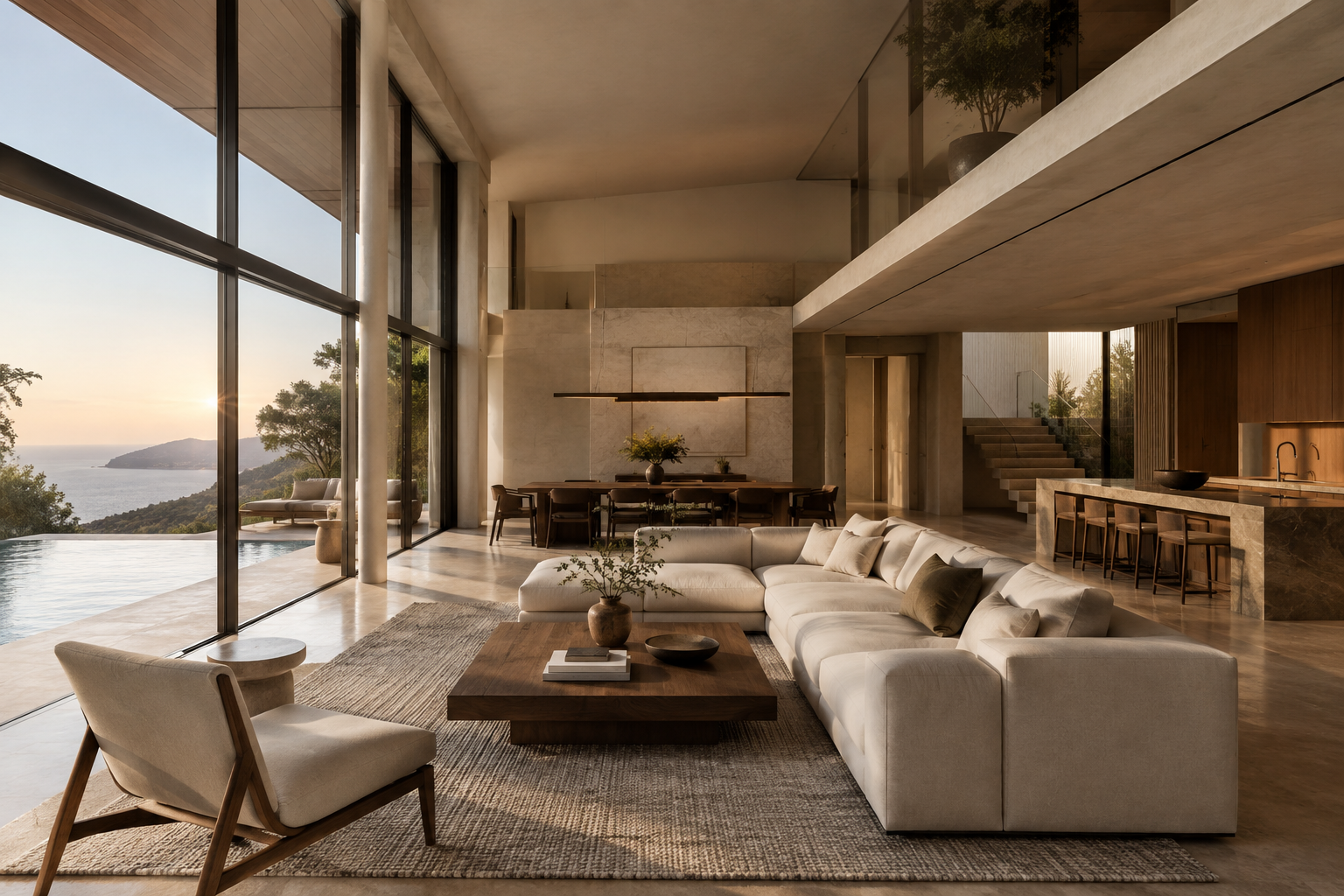
In high-end architecture and interior design, luxury is increasingly being defined by what is left out rather than what is added. In 2026, sophisticated residential design is placing greater emphasis on proportion, scale, light, and the feeling of space.
A beautifully designed home does not need to be filled with expensive furniture or dramatic finishes to feel luxurious. Instead, luxury home design begins with the architecture itself. Generous ceiling heights, carefully considered room proportions, framed views, and thoughtful circulation can create a sense of calm and permanence that decoration alone cannot achieve.
This is where the expertise of an architect and interior designer becomes particularly valuable. The relationship between rooms, openings, furniture, materials, and natural light must be considered as one cohesive composition. When these elements are properly balanced, even relatively restrained interiors can feel exceptionally refined.
For bespoke residential architecture, restraint also creates longevity. Rather than designing around short-lived trends, homeowners are increasingly choosing spaces with strong architectural foundations that can evolve naturally over time.
Materiality plays an important role too. A single carefully selected stone, timber species, or textured finish can have more impact than a collection of competing materials. The objective is not to make every element stand out, but to ensure that everything belongs together.
Ultimately, the hallmark of exceptional luxury interior design is not how much a space contains, but how effortlessly it works. True luxury is space that feels considered, comfortable, and timeless.