
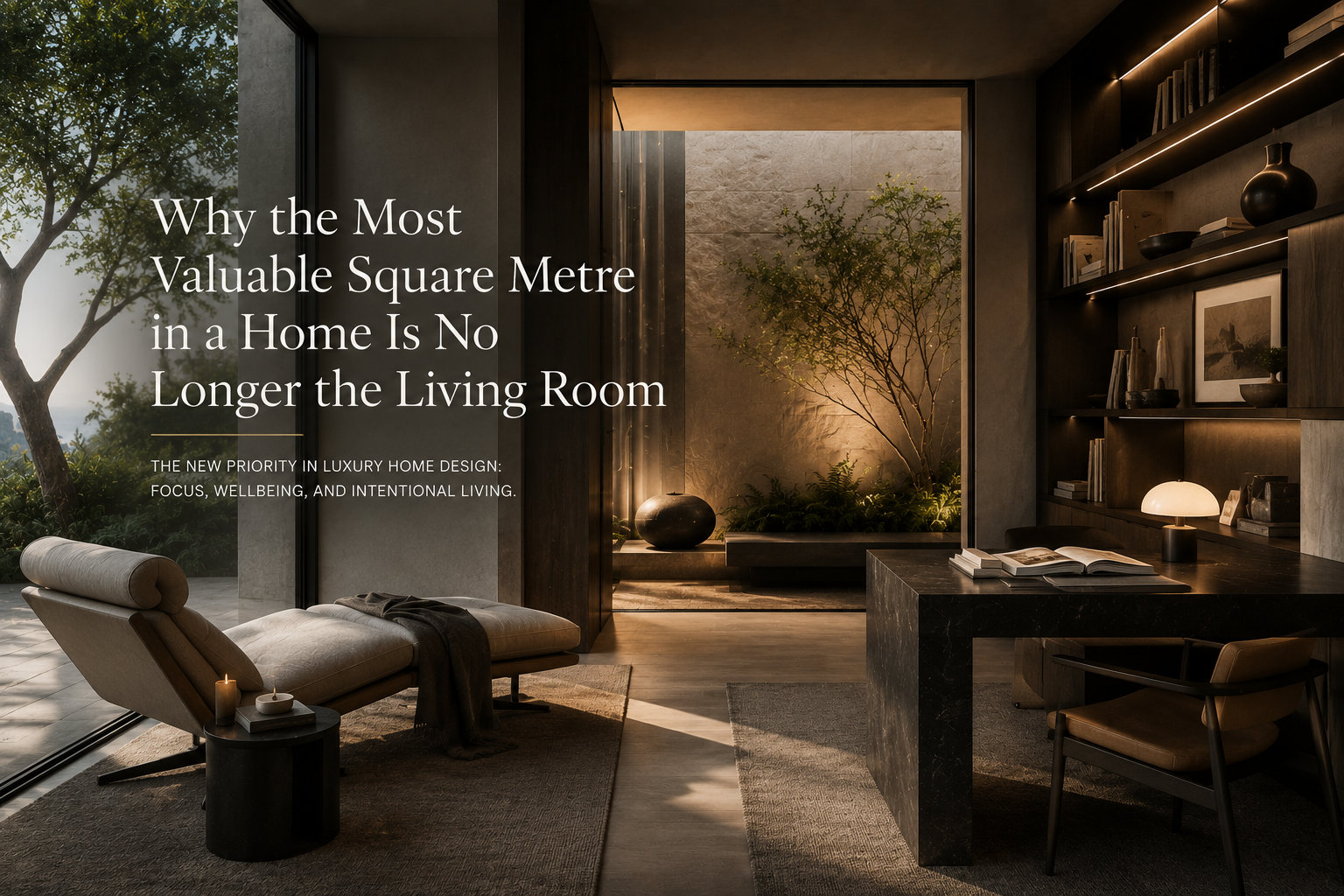
For decades, the living room was considered the centrepiece of residential design. It was often the largest, most expensive, and most visually impressive space in the home. But in 2026, a significant shift is occurring within luxury architecture and interior design: homeowners are placing greater value on spaces dedicated to focus, wellbeing, and personal restoration.
The rise of hybrid work, digital connectivity, and increasingly demanding lifestyles has changed how people interact with their homes. Clients are no longer asking architects to simply maximise floor area; they are seeking environments that improve quality of life. As a result, some of the most requested spaces in modern luxury homes are no longer formal lounges or oversized entertainment areas, but libraries, wellness rooms, meditation spaces, private courtyards, and quiet retreats.
This evolution reflects a broader movement toward intentional living. The most successful residential architecture projects are designed around daily rituals rather than occasional events. A carefully positioned reading nook that captures morning sunlight may provide more value to a homeowner than a grand room used only a few times each year.
Interior designers are responding by creating spaces that encourage focus, relaxation, and emotional wellbeing. Natural materials, acoustic treatments, layered lighting, and thoughtful spatial planning are becoming essential elements of high-end residential design.
The future of luxury is not defined by size alone. It is defined by how effectively a home supports the people who live within it. In an increasingly connected world, the greatest luxury may simply be having a place to disconnect.