
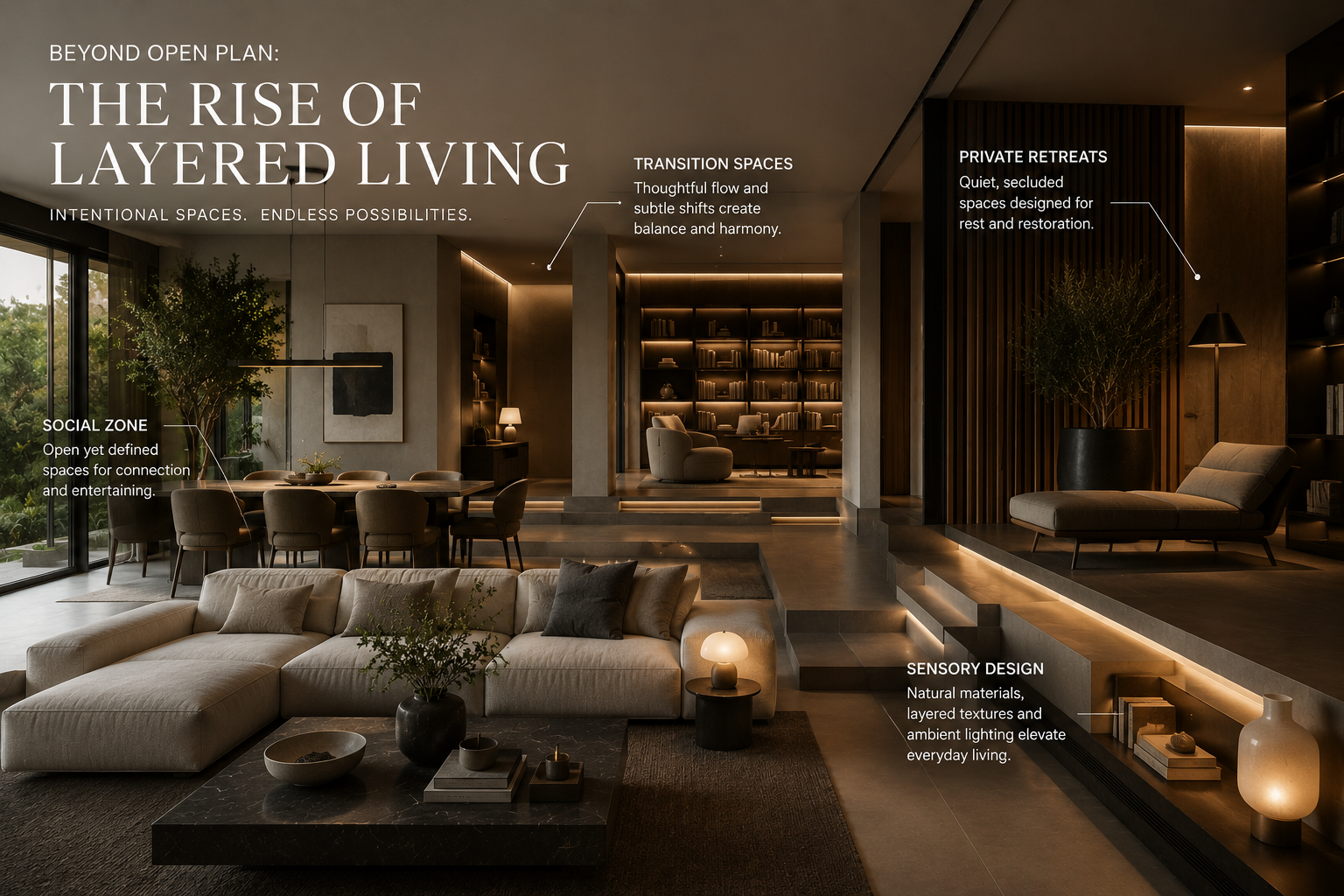
For years, open-plan living dominated modern architecture and interior design. But in 2026, luxury homes are evolving toward a more refined concept: layered living. High-end homeowners are moving away from vast, undefined spaces and embracing residences designed with intimacy, flexibility, and emotional comfort in mind.
In today’s luxury residential architecture, the focus is no longer on making spaces feel bigger—it is about making them feel better. Architects and interior designers are creating homes with intentional transitions between social, private, and wellness-focused areas. Softly divided lounges, hidden libraries, private retreat rooms, and multifunctional spaces are redefining how modern families experience luxury.
This shift is also influencing high-end interior design trends. Rich textures, curved forms, acoustic materials, and ambient lighting are being used to create warmth and depth within contemporary homes. Instead of minimalist spaces that feel cold or overly formal, clients are seeking environments that feel sophisticated yet deeply livable.
Another defining trend is sensory design. Luxury homeowners are investing in spaces that improve daily wellbeing through natural light, tactile materials, scent integration, and calming spatial flow. These details elevate a residence from visually impressive to emotionally restorative.
Technology continues to evolve discreetly in the background. Integrated smart home design systems now enhance comfort seamlessly, without interrupting the architectural experience.
Ultimately, the future of luxury interior architecture lies in designing homes that support modern lifestyles with elegance and intention. In 2026, true luxury is no longer measured by scale alone, but by how a space makes people feel every single day.