
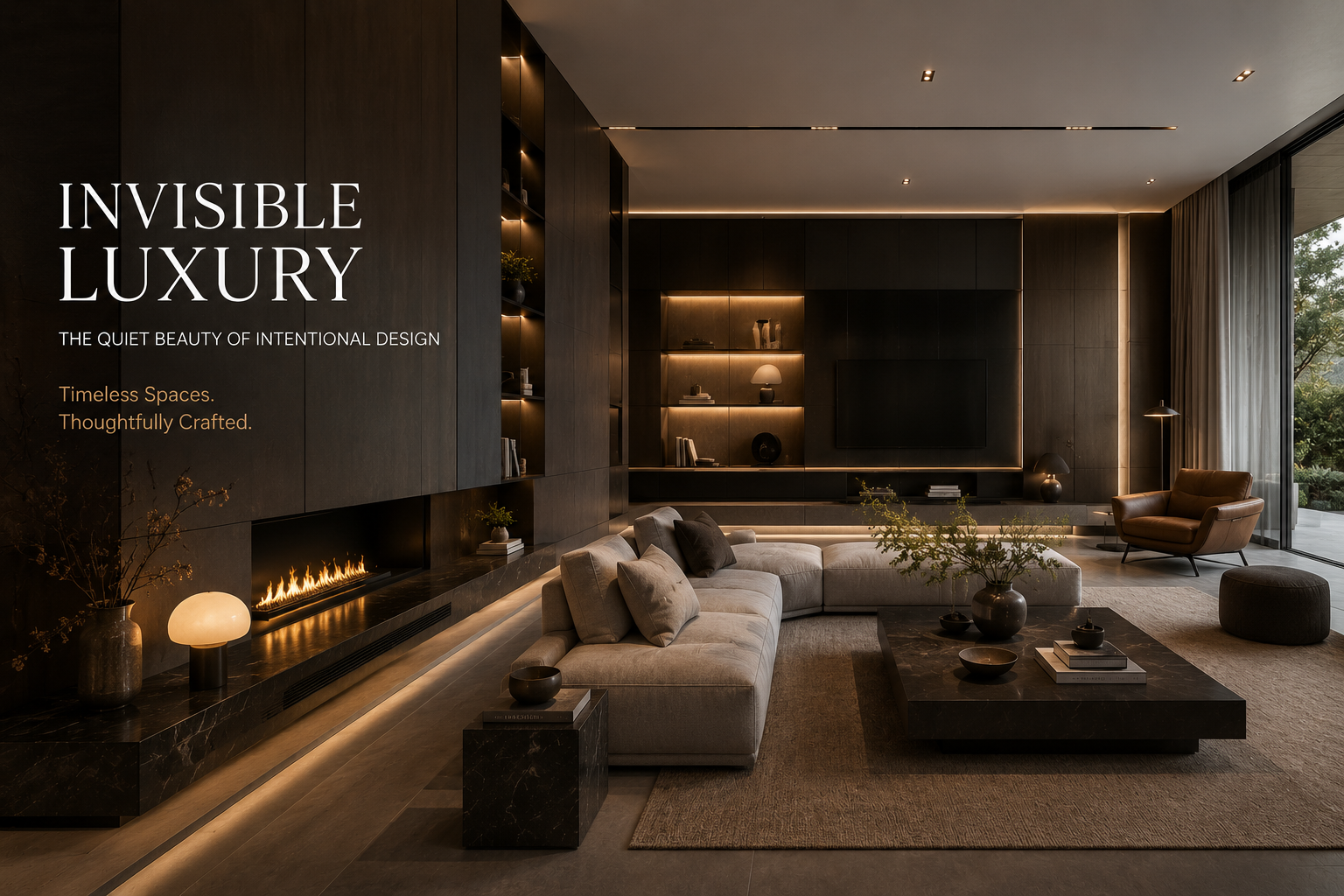
The future of luxury architecture and interior design is becoming quieter, cleaner, and significantly more refined. In 2026, the world’s most exclusive homes are embracing a concept known as Invisible Luxury—a design philosophy where sophistication is communicated through precision, craftsmanship, and experience rather than obvious displays of wealth.
Today’s affluent homeowners are moving away from decorative excess and toward spaces that feel effortless. In high-end residential architecture, this means concealed functionality, seamless detailing, and perfectly balanced proportions. Hidden doors, flush cabinetry, integrated lighting, and frameless transitions are replacing visually heavy interiors, creating homes that feel calm, expansive, and architecturally pure.
In luxury interior design, materials are carrying the emotional weight of the space. Designers are prioritizing natural travertine, smoked oak, textured limestone, brushed metal, and hand-finished plaster to introduce depth and authenticity. These tactile surfaces create a richer sensory experience while reinforcing timeless elegance.
Another defining element is architectural restraint. Rather than filling homes with unnecessary features, elite design firms are focusing on curated simplicity—allowing natural light, spatial flow, and craftsmanship to become the true statement. This approach is increasingly sought after in modern luxury homes, where clients value serenity and permanence over trends.
Technology is also becoming intentionally invisible. Advanced smart home systems are now integrated discreetly into the architecture, enhancing comfort without disrupting the aesthetic.
Ultimately, the highest level of luxury is no longer about what demands attention—it is about what feels intuitively exceptional. The most desirable homes in 2026 are designed to be experienced quietly, yet remembered deeply.