
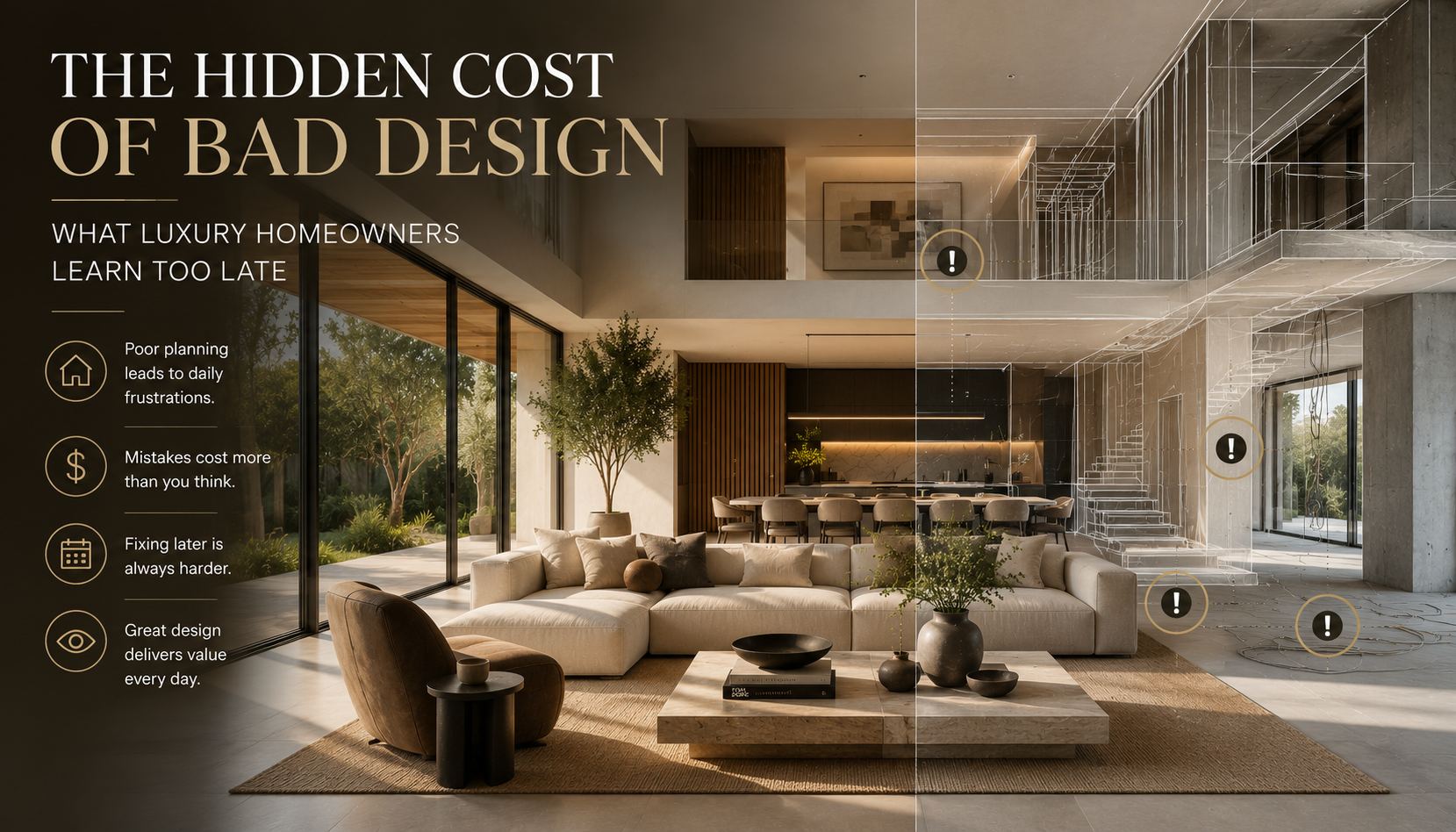
Many homeowners assume that great architecture is about aesthetics. While visual appeal is important, the true value of exceptional design often becomes apparent only after a home is occupied.
One of the most common mistakes in residential construction is prioritising appearance over performance. A home may look impressive in photographs, yet fail to support the daily routines of the people who live there. Poor circulation, inadequate storage, harsh lighting, excessive heat gain, and disconnected living spaces can diminish the experience of a home regardless of its size or budget.
In luxury residential architecture, the most successful projects are those where design decisions are driven by lifestyle. Before considering materials or finishes, leading architects focus on how a family moves through a space, where natural light enters throughout the day, how indoor-outdoor living areas connect, and how rooms evolve as needs change over time.
The same principle applies to luxury interior design. The placement of furniture, lighting, joinery, and architectural features can dramatically influence comfort, functionality, and wellbeing. The best interiors feel effortless because every detail has been carefully considered long before construction begins.
This is why experienced architects and interior designers spend so much time planning. Great design is not simply about creating beautiful spaces—it is about eliminating future frustrations before they occur.
The hidden cost of bad design is not measured in dollars alone. It is measured in missed opportunities, compromised lifestyles, and daily inconveniences that could have been avoided. The highest-performing homes are not just visually impressive; they are intelligently designed homes that improve everyday living, enhance long-term value, and support the lifestyle of their owners for decades to come.