
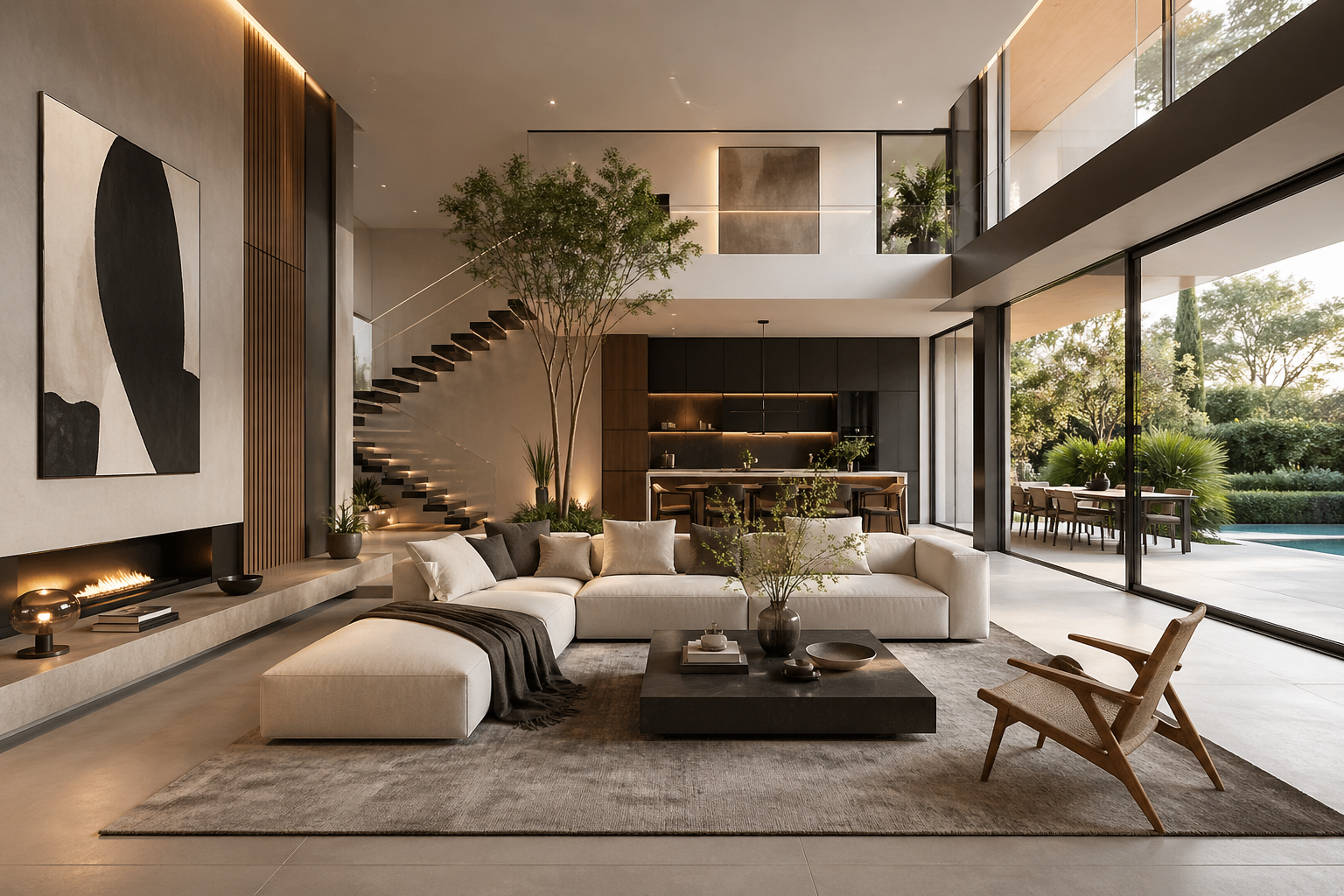
In 2026, the most influential shift in luxury architecture and interior design is the rise of quiet luxury—a movement defined not by excess, but by precision, restraint, and enduring quality. High-end clients are moving away from trend-driven aesthetics and toward timeless architectural design that prioritizes proportion, craftsmanship, and spatial experience.
This evolution is particularly evident in bespoke residential architecture, where layouts are increasingly designed around lifestyle flow rather than formal convention. Open-plan living is being refined into intentional zoning—private retreats, wellness spaces, and multi-functional environments that support modern living without compromising elegance.
In high-end interior design, detailing has become the new statement. Seamless joinery, concealed storage, and integrated lighting systems create clean, uninterrupted lines, allowing materials and form to take precedence. This level of execution is what distinguishes true luxury home design from standard developments.
Sustainability is no longer an add-on—it is embedded in the design process. Clients are prioritizing energy-efficient architecture, passive cooling strategies, and locally sourced materials that align with both environmental responsibility and long-term property value.
Another defining element is personalization. Today’s most sought-after spaces are highly curated, reflecting the client’s identity through custom interior solutions, art integration, and one-of-a-kind finishes.
As the market matures, the definition of luxury continues to evolve. It is no longer about what is seen at first glance, but what is experienced over time—spaces that feel effortless, refined, and built to last. This is the future of design.