
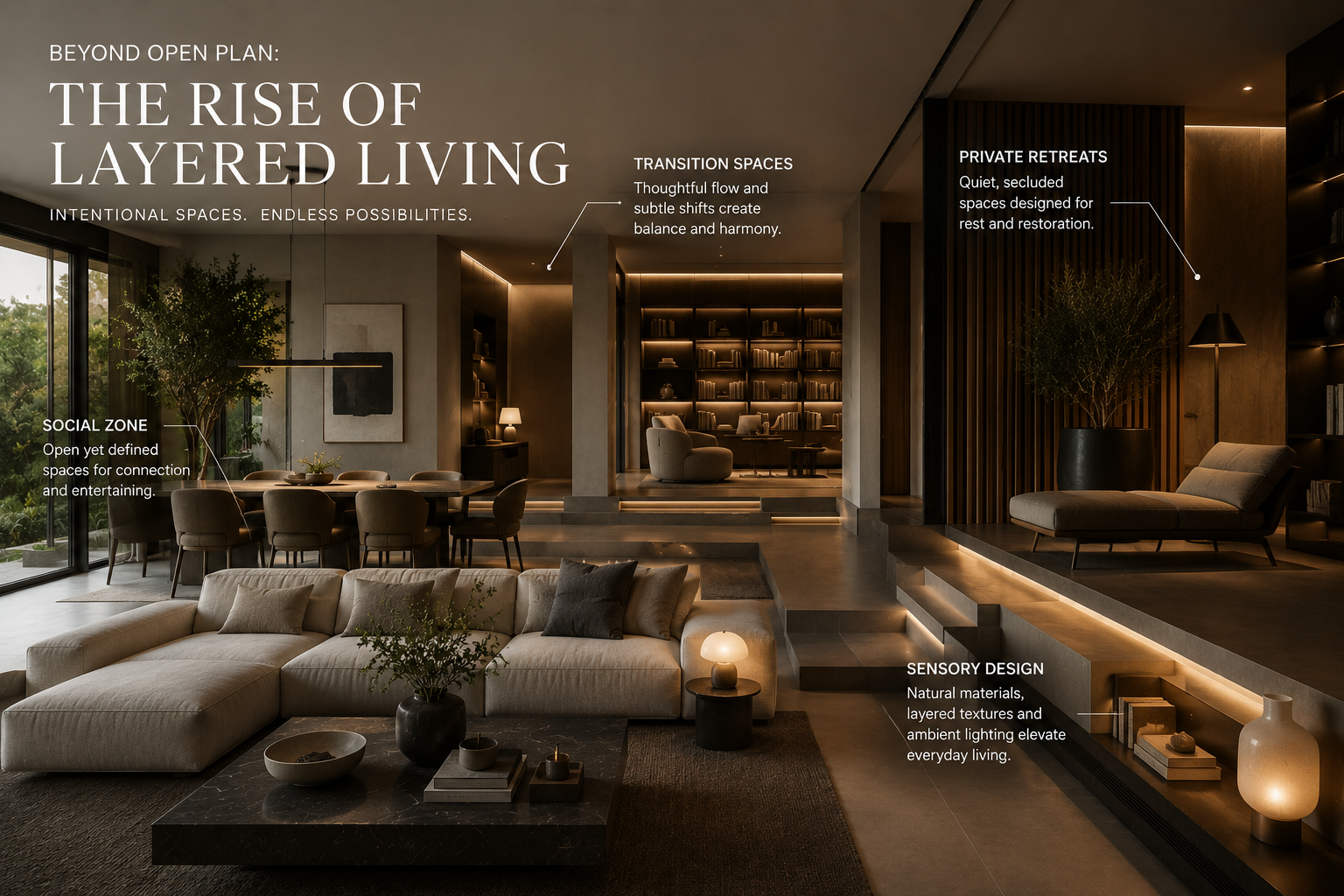
Layered living represents a fundamental shift in how we think about residential design. For years, open-plan living dominated modern architecture and interior design, but high-end homeowners are now moving toward a more nuanced approach. Instead of vast, undefined spaces, today’s luxury homes embrace intentional zones that offer intimacy, flexibility, and emotional comfort.
This evolution reflects a deeper understanding of how families actually live. The best residential architecture recognises that different moments in daily life require different spatial qualities. A home needs to accommodate both gathering and retreat, conversation and concentration, energy and rest.
What Layered Living Means in Practice
Layered living is not about returning to closed-off rooms or abandoning spatial flow. It is about creating meaningful transitions between different areas of the home. These transitions might be visual, acoustic, or experiential, but they give each space its own character and purpose.
In practical terms, this often means designing homes with softly divided lounges, alcoves for reading or study, and dedicated wellness areas. A living zone might open onto a dining space, but with a subtle shift in ceiling height, flooring material, or lighting quality that marks the threshold. These gestures are quiet but effective.
The result is a residence that feels both generous and intimate. Spaces connect when connection is desired, but also allow for privacy and focus when needed. This flexibility is particularly valuable in homes where people work, study, entertain, and relax under one roof.
The Role of Materials and Detailing
Achieving layered living requires careful attention to materials and finishes. Rich textures, varied surface treatments, and acoustic materials help define different zones without relying on walls or doors. Curved forms and joinery elements can create gentle boundaries that guide movement through the home.
Ambient lighting plays a critical role as well. Different layers of light, from natural to architectural to decorative, establish mood and reinforce the character of each space. Lighting should be considered as part of the architecture from the earliest design stages, not added as an afterthought.
These details elevate a home from visually striking to genuinely livable. The goal is to create environments that feel sophisticated yet warm, contemporary yet enduring. When materials and detailing are handled with care, the architecture supports daily life in ways that are both subtle and profound.
Sensory Design and Wellbeing
Another dimension of layered living is its emphasis on sensory experience. Luxury homeowners increasingly understand that a home should support wellbeing, not just provide shelter. This means designing for natural light, tactile pleasure, calming spatial flow, and even scent and sound.
Natural light is perhaps the most important element. How light moves through a home over the course of the day shapes how we feel in it. Considered placement of windows, skylights, and glazed openings allows light to reach deep into the plan and create varied conditions throughout.
Tactile materials contribute to a sense of comfort and connection. Timber, stone, linen, and other natural surfaces invite touch and age gracefully over time. These materials also carry acoustic properties that soften sound and make spaces feel calmer and more contained.
The cumulative effect of these sensory considerations is a home that feels restorative. True luxury is not about impressing visitors but about enriching everyday experience. A well-designed residence should make the people who live in it feel better, day after day.
Technology as a Supporting Layer
Technology has an important role in contemporary residential design, but it should remain in the background. Integrated smart home systems can enhance comfort, efficiency, and security without disrupting the architectural experience. The best technology is invisible or nearly so.
Automated lighting, climate control, and audio-visual systems allow occupants to adjust their environment intuitively. When these systems are integrated during design rather than retrofitted, they become part of the architecture itself. Cables, controls, and devices can be concealed within joinery, ceilings, and walls.
This discreet approach ensures that technology serves the home rather than dominating it. The focus remains on materiality, light, proportion, and spatial quality. Technology is simply another layer that supports the way people live, alongside all the others.
Designing Homes with Intention and Elegance
Ultimately, layered living is about designing with intention. Every decision, from the overall planning to the smallest detail, should contribute to a coherent vision of how the home will be experienced. This requires patience, collaboration, and a willingness to refine ideas over time.
Working with a registered architect ensures that this process is grounded in both design expertise and regulatory knowledge. Our services are structured to guide clients through every stage, from initial concepts to construction documentation and contract administration.
In our own work, we have explored layered living in a variety of contexts. Each project responds to its site, the needs of the client, and the particularities of the brief. The underlying principle remains constant: create spaces that feel rich, adaptable, and deeply connected to the rhythms of daily life.
The future of luxury home design lies in this approach. True luxury is no longer measured by scale or spectacle alone, but by how thoughtfully a home supports the lives lived within it. Spaces should be beautiful, certainly, but they should also be comfortable, flexible, and emotionally nourishing.
Layered living offers a framework for achieving all of this. It honours the complexity of contemporary life while maintaining clarity and elegance in built form. It recognises that the best architecture is both calm and dynamic, both generous and intimate.
If you are considering a new home or renovation and would like to explore how these ideas might apply to your project, we would welcome the opportunity to discuss your vision. Please visit our About page to learn more about our practice and get in touch.