
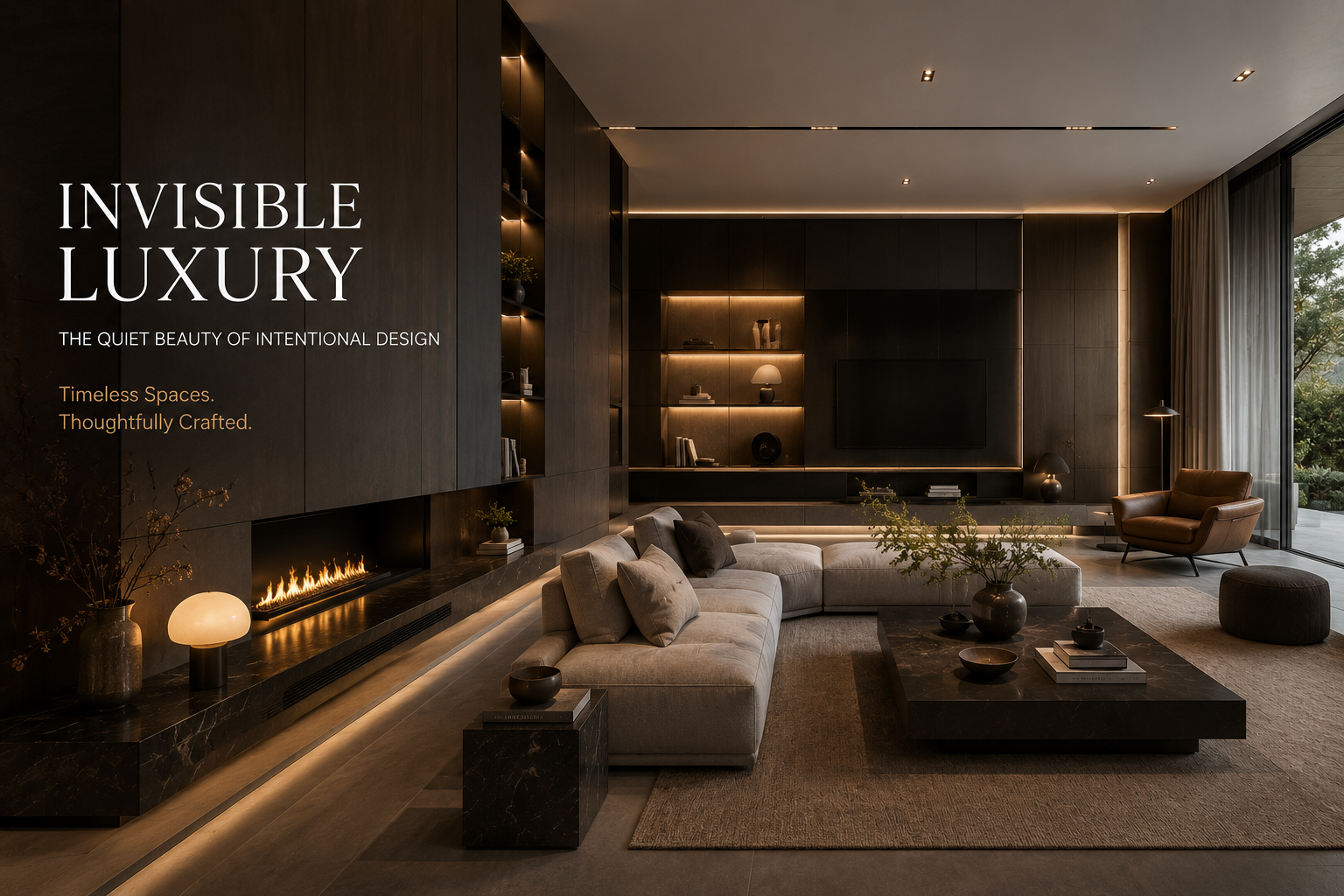
In contemporary residential architecture, invisible luxury has emerged as the defining philosophy for the world’s most exclusive homes. It represents a fundamental shift away from ostentatious display toward something far more refined: spaces where sophistication is communicated through precision, craftsmanship, and experience rather than obvious statements of wealth.
Today’s discerning homeowners are moving away from decorative excess and toward environments that feel effortless. The most desirable residences now prioritize concealed functionality, seamless detailing, and perfectly balanced proportions over visual drama.
What Defines Invisible Luxury in Architecture
At its core, invisible luxury is about making the complex appear simple. It requires exceptional skill to create homes where every detail is resolved so carefully that nothing calls attention to itself, yet the overall experience feels quietly extraordinary.
In high-end residential architecture, this translates to hidden doors that sit flush with walls, cabinetry integrated so seamlessly it becomes part of the architecture, and lighting that appears sourceless. Frameless transitions between spaces, concealed storage solutions, and meticulously detailed junctions replace the visually heavy interiors that once signalled prestige.
The result is architecture that feels calm, expansive, and pure. Rooms breathe. Sightlines extend uninterrupted. The home becomes a backdrop for living rather than a collection of features competing for attention.
Material Authenticity and Tactile Richness
When ornamentation recedes, materials carry the emotional weight of a space. Natural travertine, smoked oak, textured limestone, brushed metal, and hand-finished plaster introduce depth and authenticity without relying on pattern or decorative motifs.
These tactile surfaces create a richer sensory experience. The grain of timber, the warmth of stone, the subtle variation in plaster all speak to craftsmanship and permanence. They age beautifully, developing character rather than appearing dated.
In luxury interior design, the focus shifts from selecting statement pieces to curating materials that work in quiet harmony. Each surface is chosen not just for how it looks but for how it feels, how light moves across it, and how it contributes to the overall atmosphere of the home.
Architectural Restraint and Spatial Clarity
Another defining characteristic of invisible luxury is restraint. Rather than filling homes with unnecessary architectural gestures, the approach focuses on curated simplicity. Natural light, spatial flow, and proportion become the true statement.
This requires discipline. It means resisting the temptation to add features simply because budget allows, and instead asking what truly serves the life of the home. Often, the most powerful design move is the one not made.
Working with a registered architect becomes particularly valuable in achieving this balance. The skill lies in understanding how to edit, how to refine, and how to create spaces that feel generous without excess. Our design approach centres on this kind of thoughtful resolution.
In modern luxury homes, clients increasingly value serenity and permanence over trends. They want homes that will feel as relevant in twenty years as they do today, spaces that offer respite from a visually noisy world.
Technology as Invisible Infrastructure
Advanced smart home systems now integrate discreetly into the architecture itself. Climate control, lighting, security, and entertainment systems enhance comfort and functionality without disrupting the aesthetic purity of the space.
The technology is there when needed but disappears when not. Control panels vanish into walls, speakers integrate into ceilings, and automated systems respond to patterns of use without requiring visible interfaces.
This invisibility extends to sustainable design strategies as well. Solar panels, rainwater harvesting, thermal mass, and passive ventilation work quietly in the background, contributing to the home’s performance without announcing themselves.
Why Invisible Luxury Resonates Now
The appeal of invisible luxury reflects broader cultural shifts. In an age of constant digital stimulation and visual clutter, people are seeking refuge in calm, considered environments. The home becomes a sanctuary defined by quality rather than quantity.
There is also a growing appreciation for longevity in design. Rather than following trends that will date quickly, homeowners are investing in timeless qualities: beautiful proportions, honest materials, and exceptional craftsmanship. These elements transcend fashion.
Importantly, this approach does not mean minimalism for its own sake or coldness. The best examples of invisible luxury feel warm, lived in, and deeply personal. They simply achieve richness through different means: texture rather than pattern, space rather than objects, light rather than ornament.
The shift also represents a more mature understanding of luxury itself. True luxury is not about impressing visitors but about creating an environment that genuinely supports and enriches daily life. It is about coming home to a space that feels intuitively right, where every element has been considered but nothing feels laboured.
Ultimately, the highest level of luxury is no longer about what demands attention. It is about what feels intuitively exceptional. The most desirable homes are designed to be experienced quietly, yet remembered deeply.
This design philosophy requires patience, skill, and a willingness to prioritise the essential over the merely impressive. It asks architects and clients alike to trust in the power of restraint, to value experience over appearance, and to understand that the most sophisticated spaces are often the most understated.
If you are considering a residential project that embraces these principles, we would welcome the opportunity to discuss how invisible luxury might shape your home. Learn more about our practice and how we approach design for discerning clients across Sydney.