
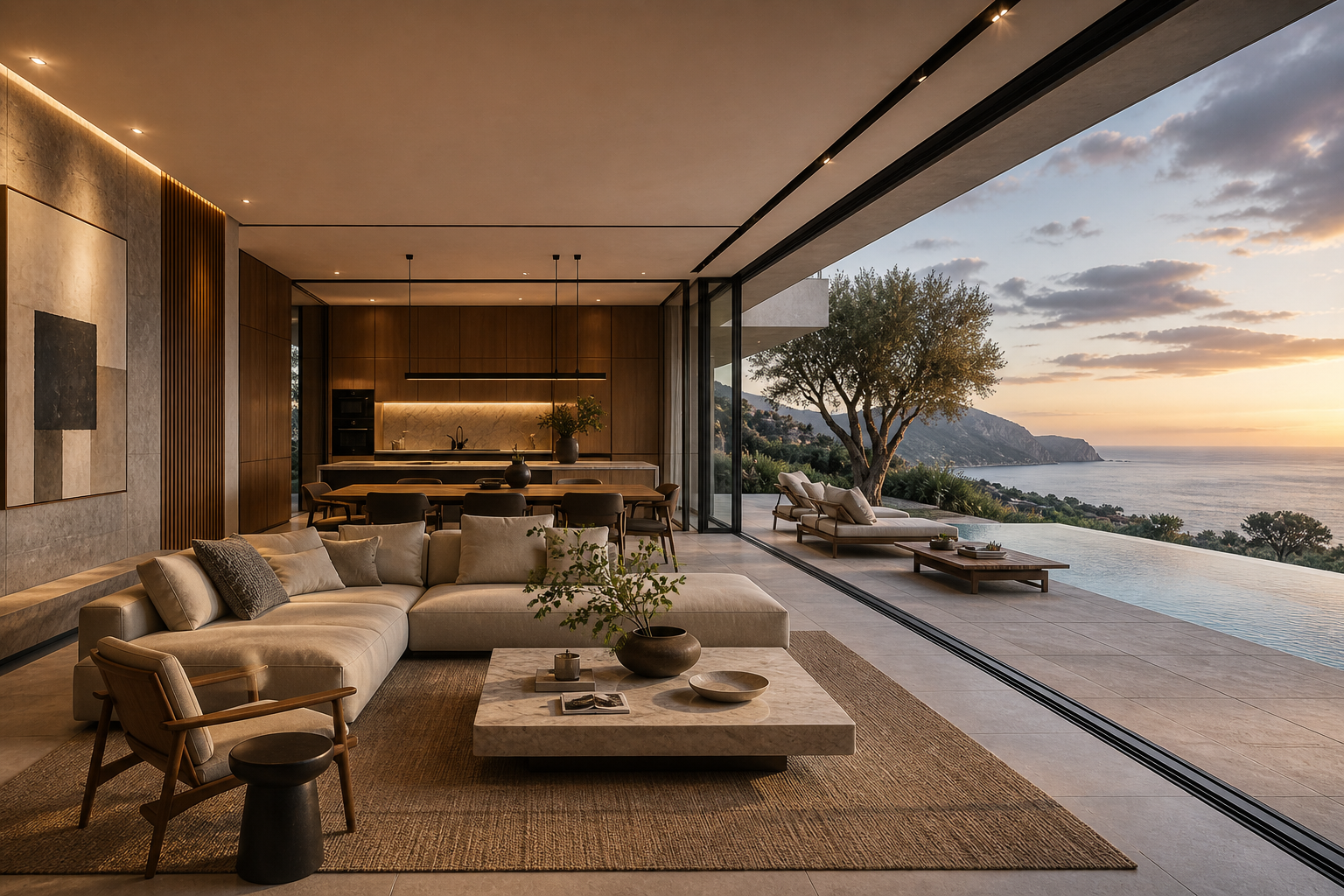
Future-proof design has become the defining objective for luxury residential architecture in Australia today. Clients are no longer simply seeking beautiful homes. They want spaces that anticipate change, adapt to evolving needs, and remain relevant for decades to come.
As a registered architect working in Sydney, I’ve observed a fundamental shift in how people think about investing in their homes. The question is no longer just what works now, but what will continue to work as families grow, technology advances, and the way we live transforms.
What Future-Proof Design Really Means
At its core, future-proof design is about longevity and adaptability. It means creating residential architecture that responds intelligently to change without requiring major structural intervention. This approach values flexibility over fixed assumptions, quality over trends, and thoughtful planning over short-term solutions.
The concept extends beyond the physical structure. It encompasses how a home integrates with emerging technologies, how spaces can be reconfigured as needs shift, and how materials and systems perform over time. It is as much about foresight as it is about design skill.
Flexible Spatial Design for Changing Needs
One of the most significant trends in high-end residential architecture is the move toward flexible spatial design. Modern homes are no longer static arrangements of fixed-purpose rooms. They are designed with adaptability in mind, allowing spaces to evolve as lifestyles change.
Multi-functional living areas, convertible workspaces, and rooms that can shift purpose without major renovation are now essential. This is particularly valuable for families who want their homes to accommodate different phases of life, from young children to teenagers, home offices to guest suites.
Bespoke home design now prioritises fluidity without compromising elegance or spatial quality. The challenge is to create rooms that feel purposeful and refined while retaining the capacity to transform. This requires careful planning of structural elements, service routes, and spatial proportions from the outset.
Building in Future-Proof Design Through Material and System Selection
Material choice plays a critical role in how well a home ages. Durable, high-quality materials not only perform better over time but also reduce the need for ongoing maintenance and replacement. This is where intelligent investment pays dividends.
We focus on materials that develop character as they age rather than deteriorate. Natural stone, timber, and metal finishes, when properly detailed and installed, improve with time. They also align with sustainable principles by reducing waste and the environmental cost of replacement cycles.
Energy-efficient systems and passive design strategies are equally important. Homes designed with careful orientation, natural ventilation, thermal mass, and shading perform well regardless of energy costs or technology shifts. These principles have endured because they are grounded in physics and climate, not fashion.
Eco-friendly architecture now integrates these strategies as standard practice. Clients are increasingly aware that sustainability is not just ethical, it is a hallmark of intelligent, high-end design that protects long-term value.
Sensory Quality and the Interior Experience
In premium interior design, there is a growing emphasis on sensory experience. Lighting design, acoustics, and spatial flow are being carefully curated to create environments that feel calm, immersive, and intuitive. These elements are essential in delivering the elevated standard expected in luxury home interiors.
Future-proof design considers how light enters and moves through a space across seasons and times of day. It accounts for acoustic comfort, ensuring that homes feel peaceful and private. It shapes circulation so that movement through the home feels natural and effortless.
These qualities are not achieved through decoration or finishes alone. They are embedded in the architecture itself, in ceiling heights, window placement, material selection, and the relationship between rooms. This is why early-stage architectural services are so critical to achieving genuinely future-proof outcomes.
Personalisation and the Long View
Another defining feature of contemporary residential design is architectural personalisation. From custom-built joinery to tailored material palettes, every detail is curated to reflect the client’s identity and the way they live. This sets a new benchmark in bespoke interior design services.
Personalisation does not mean creating spaces so specific that they cannot adapt. The best examples balance individual expression with enduring spatial logic. They are distinctive without being inflexible, refined without being fragile.
This approach requires a deep understanding of how clients live, what they value, and where their priorities may shift over time. It is a collaborative process that benefits from clear communication and trust between client and architect.
Technology, Infrastructure, and Preparedness
Technology in the home is evolving rapidly, and future-proof design must account for that pace of change. Rather than locking in specific systems that may become obsolete, the focus should be on creating robust infrastructure that can accommodate future upgrades.
This means planning for data cabling, electrical capacity, and equipment locations in ways that allow flexibility. It means ensuring that spaces can integrate new technology without compromising architectural quality or requiring disruptive retrofitting.
The goal is not to predict every technological shift, but to design homes resilient enough to absorb change gracefully. That resilience is built into the bones of the architecture, not bolted on afterward.
Designing Homes That Endure
Ultimately, the future of residential architecture lies in creating spaces that evolve with their owners. These are homes that remain timeless, intelligent, and built to endure, not because they resist change, but because they are designed to accommodate it.
Future-proof design is not a single strategy or checklist. It is a mindset that values foresight, quality, and adaptability. It requires experience, skill, and a genuine commitment to creating architecture that serves clients well beyond the day they move in.
If you are considering a new home or renovation and want to explore how thoughtful, future-focused design can shape your project, we would welcome the opportunity to discuss your ideas. You can learn more about our practice and get in touch here.