
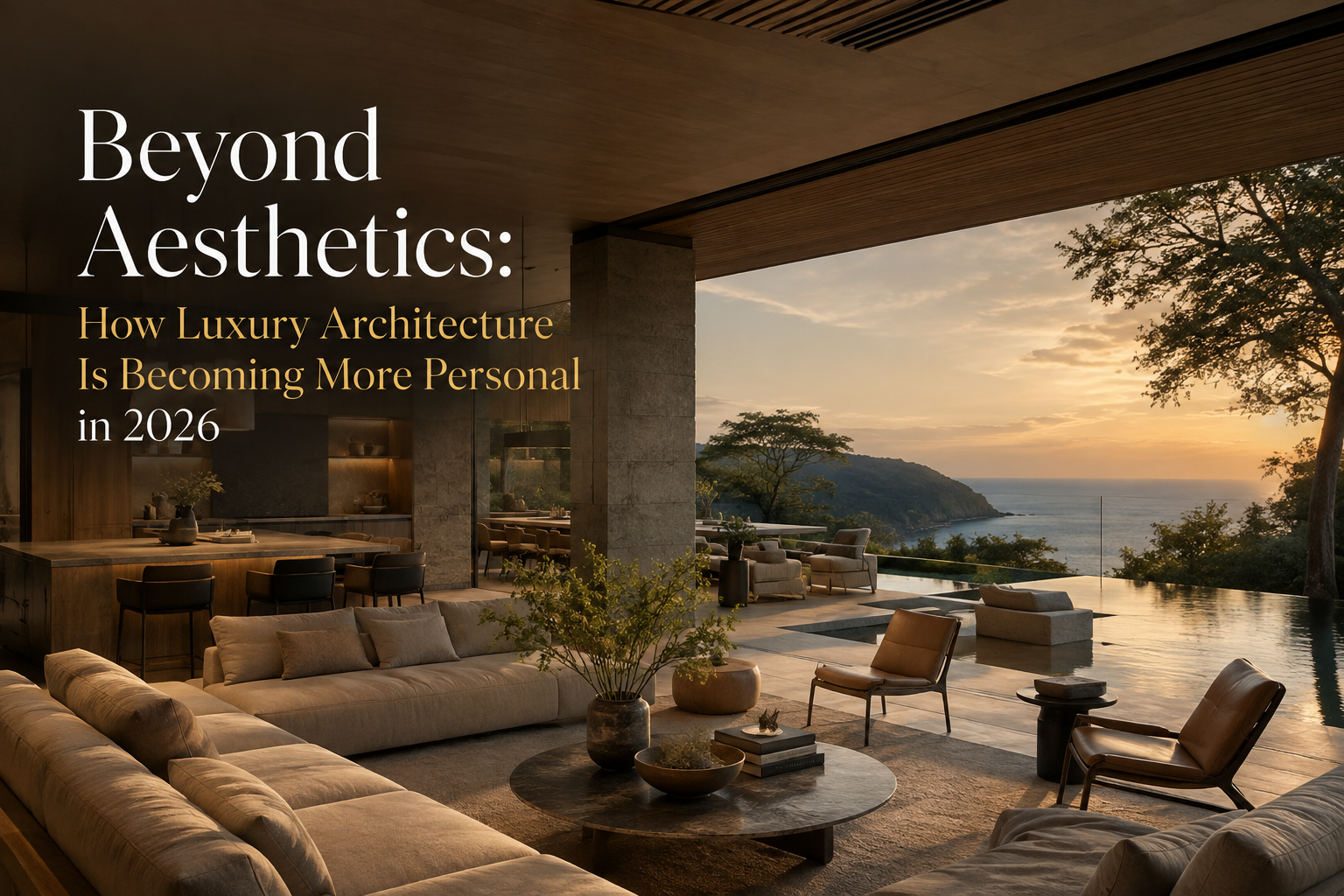
In 2026, luxury architecture is moving beyond visual appeal and toward creating deeply personal environments shaped around the way people live, work, and connect. Today’s premium clients are no longer looking for spaces that simply follow trends. They are investing in homes that tell their story and deliver a lasting sense of identity.
A growing movement in bespoke residential design is the rise of personalized architecture. Every element, from spatial planning and material selection to lighting and furniture integration, is being carefully considered to support the homeowner’s lifestyle. The result is not just a beautiful property, but a highly functional and emotionally connected living experience.
The Return of Craftsmanship in Luxury Architecture
One of the defining trends of 2026 is the return of craftsmanship. Luxury interiors are shifting away from mass-produced finishes toward custom details, artisan-made features, and carefully selected materials that create authenticity. Hand-finished surfaces, natural textures, and unique architectural elements are becoming key signatures of high-end design.
This emphasis on craft extends beyond decoration. It influences the structural decisions that shape how a home is built and experienced. When working with a registered architect through the NSW Architects Registration Board, clients gain access to professionals who understand how to balance technical rigour with creative vision, ensuring that crafted details are integrated seamlessly into the architectural fabric.
At Maya Sternberg Architects, this philosophy shapes how we approach each commission. Whether designing a new residence or carefully extending an existing home, the focus remains on quality, permanence, and the unique character that comes from thoughtful making. Materials are chosen not just for their appearance but for how they age, how they feel, and how they contribute to the overall atmosphere of the space.
Designing for How People Actually Live
Flexibility is also shaping modern homes. As lifestyles continue to evolve, architects are designing adaptable spaces that can transition between work, relaxation, entertainment, and private retreats. This approach ensures that properties remain valuable and relevant for years to come.
The most successful projects begin with understanding the rhythms of daily life. How does morning light move through the kitchen? Where do children gather after school? What kinds of spaces encourage conversation, and which support quiet focus? These are the questions that inform our services, guiding decisions about proportion, orientation, and circulation.
Adaptable design does not mean open-plan uniformity. It means creating a layered sequence of spaces that can be opened up or enclosed depending on need. A dining room might double as a study. A sunroom might serve as a yoga space in the morning and a reading retreat in the afternoon. This kind of spatial intelligence is what separates thoughtful luxury architecture from generic solutions.
Connecting to Place and Context
Personalized architecture also means responding to the specific qualities of a site. Every property has its own character, whether it is a leafy suburban block in Paddington, a coastal setting, or a rural landscape. Understanding this context and designing accordingly is central to creating homes that feel grounded and connected.
In Sydney, where many homes sit within heritage conservation areas, this connection to place often involves working sensitively with existing structures. A project like our heritage work demonstrates how contemporary design can sit comfortably alongside historic fabric, respecting the past while meeting the needs of modern living.
The landscape itself also plays a role. Gardens, courtyards, and outdoor rooms are being designed as integral parts of the architectural concept, not afterthoughts. This blurring of interior and exterior creates a richer, more varied experience of home. It allows natural light, ventilation, and seasonal change to become active participants in daily life.
Materials That Age With Dignity
Material selection has become a defining aspect of luxury architecture. Rather than chasing novelty, discerning clients are choosing materials that improve over time. Timber that develops a patina, stone that weathers gracefully, metal that acquires character. These choices reflect a longer view, one that values durability and authenticity over fleeting fashion.
There is also a renewed interest in natural materials sourced responsibly. Timber from sustainably managed forests, locally quarried stone, recycled bricks. These materials carry stories and bring warmth and texture that manufactured products cannot replicate. They connect the building to its environment and to the broader traditions of Australian architecture.
Detailing matters just as much as material choice. The way a timber handrail meets a steel balustrade, the shadow line where wall meets ceiling, the reveal around a door frame. These moments, though subtle, shape the quality of a space. They are where craft and design come together, creating an environment that feels considered at every scale.
Designing Spaces That Support Wellbeing
The next generation of luxury design is not defined by excess. It is defined by intention. The most successful architectural and interior design projects are those where every detail has purpose, creating timeless spaces that are refined, functional, and uniquely connected to the people who experience them.
Wellbeing is increasingly central to this conversation. Natural light, fresh air, acoustic comfort, thermal stability. These factors influence how we feel in a space, even if we do not consciously register them. Good design supports health and happiness by creating environments that are comfortable, calm, and conducive to the activities that matter most.
This does not mean minimalism for its sake. It means clarity of intent. Each room should have a clear purpose, a distinct character, and a relationship to the whole. Spaces should flow logically, feel proportionate, and offer moments of delight. Whether it is a window perfectly framed to capture a garden view or a stair that becomes a sculptural feature, these gestures enrich the daily experience of home.
Ultimately, personalized luxury architecture is about creating homes that feel right. Not because they follow a formula, but because they respond to the specific needs, values, and aspirations of the people who will live in them. It is architecture that listens before it speaks, that observes before it proposes, and that creates enduring value through thoughtful, site-specific design.
If you are considering a new home or renovation and would like to discuss how we might work together, we would welcome the opportunity to learn more about your project. Visit our About page to get in touch with Maya Sternberg Architects.