
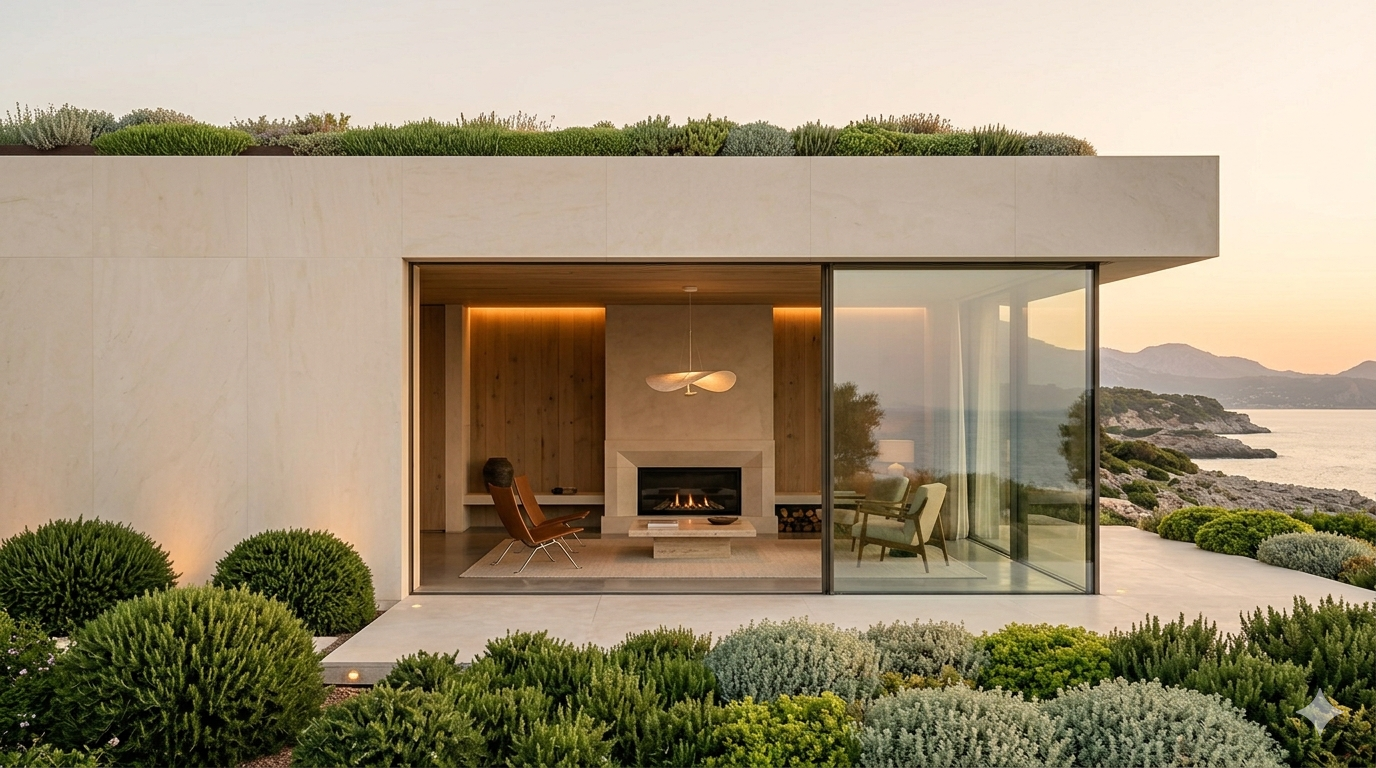
Luxury design in 2026 is being reshaped by a quiet revolution, one that favours depth over spectacle and meaning over excess. As we move deeper into the year, architecture and interior design are being redefined by a fusion of technology, sustainability, and emotional intelligence, with clients increasingly investing in spaces that reflect identity and purpose rather than empty opulence.
At the forefront is contextual minimalism, a refined evolution of minimal design that prioritizes material authenticity, spatial clarity, and environmental harmony. This is not about visual austerity but about creating meaningful, livable spaces that resonate with the people who inhabit them.
Biophilic Design with Greater Sophistication
Biophilic design continues to dominate high-end residential and commercial projects, but with a level of sophistication that goes well beyond decorative greenery. Instead of adding plants as afterthoughts, designers are integrating living systems, vertical ecosystems, natural ventilation strategies, and daylight optimization into the very fabric of architecture.
These are spaces that actively improve wellbeing and performance. The connection to nature is not superficial but structural, woven into how a building breathes, how light moves through rooms, and how indoor and outdoor spaces relate to one another.
This approach aligns closely with our work on projects such as Pavilion, where landscape and built form are conceived as a unified whole. The goal is always to create environments that feel grounded, restorative, and inherently connected to place.
Technology That Disappears into Experience
Technology is also becoming invisible yet essential in luxury design. Smart environments are now seamlessly embedded into architecture, where lighting, climate, and acoustics respond intuitively to human behaviour without requiring constant interaction or visibility.
The best design no longer showcases technology. It quietly disappears into the experience of space, allowing people to feel comfortable, supported, and attuned to their environment without mechanical intervention being apparent.
This philosophy requires careful collaboration between architects, engineers, and craftspeople. Working with a registered architect ensures that these complex systems are integrated thoughtfully, preserving the integrity and clarity of the design while enhancing comfort and performance.
Tactile Luxury and Material Authenticity
Material selection is shifting toward what might be called tactile luxury. Limewash finishes, natural stone with raw edges, reclaimed timber, and bespoke handcrafted elements are replacing the polished uniformity that once defined premium interiors.
These materials create depth, imperfection, and emotional warmth, qualities that ultra-premium clients increasingly value. There is a growing appreciation for the hand of the maker, for surfaces that age gracefully, and for materials that carry history and character.
This is not a trend toward rusticity for its own sake. It is about creating spaces with soul, where every surface and detail has been considered not just for appearance but for how it feels, how it wears, and how it contributes to a sense of place and permanence.
Luxury Design as Resonance, Not Spectacle
Ultimately, the future of luxury design is not about spectacle. It is about resonance, about creating spaces that feel timeless, grounded, and deeply personal.
The most sought-after homes and interiors are those that reflect a clear design vision while responding sensitively to context, climate, and the lives of their inhabitants. They are spaces that feel inevitable, as though they could not have been designed any other way.
This requires a design-led approach that begins not with aesthetics but with understanding. What is the character of the site? How does light move across it? What materials belong here? How will the people who live here actually use the space, and what do they value most?
These questions guide every decision, from the macro scale of form and orientation down to the micro scale of joinery details and hardware selection. The result is architecture that feels cohesive, considered, and calm, a quality that becomes more valuable as the world around us grows noisier and more fragmented.
Design That Becomes Legacy
Luxury today is less about statement pieces and more about longevity. Clients are looking for spaces that will remain relevant, comfortable, and beautiful not just for a few years but for generations.
This shift reflects a broader cultural move toward sustainability, not just in environmental terms but in emotional and aesthetic terms as well. People want homes that feel enduring, that improve with age, and that tell a story specific to them and their place.
Our services are built around this principle. We design residential architecture that responds to the unique qualities of each site and client, creating homes that are as functional as they are beautiful, and as considered as they are calm.
The integration of technology, the careful selection of materials, the layering of natural light and ventilation, all of these elements are in service of a larger goal: to create spaces that feel right, that work quietly and efficiently, and that support the daily rituals and long-term aspirations of the people who live in them.
This is where design becomes legacy, not decoration. It is where architecture transcends trend and becomes part of the enduring fabric of a family’s life and a neighbourhood’s identity.
If you are considering a new home or renovation and want to explore how thoughtful, design-led architecture can enhance your life, we would welcome the opportunity to discuss your project. Learn more about our practice and approach at Maya Sternberg Architects.