
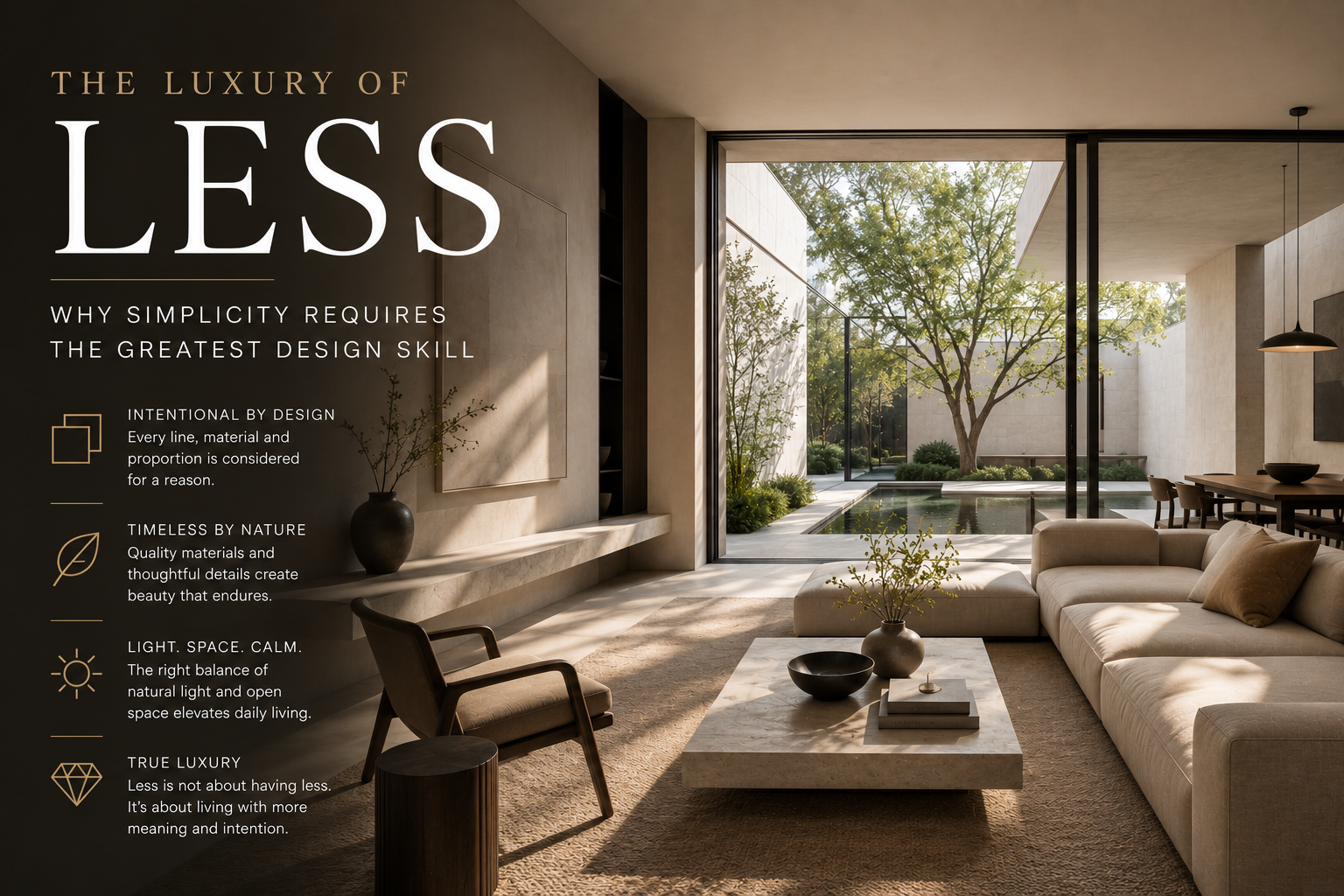
Simplicity in residential architecture is often misunderstood as the absence of effort, but achieving truly refined minimalist design demands greater skill, discipline and resolve than almost any other approach. At first glance, homes with clean lines, open spaces and restrained material palettes can appear effortless. In reality, the opposite is true. Some of the finest examples of luxury architecture are the result of extraordinary precision, technical mastery and meticulous planning that begins long before construction starts.
When every detail is visible, every detail matters. There is nowhere to hide.
Why Simplicity Is the Hardest Design Challenge
Unlike heavily decorated interiors where embellishment can distract from flaws, minimalist architecture leaves no room for imperfection. The alignment of walls, the junction between materials, the proportions of each room, and the quality of natural light become the defining features of the home. A single poorly resolved detail can compromise the entire composition.
This is why exceptional high-end residential architecture depends on precision long before the first brick is laid. Every dimension, every material transition, every sightline must be considered and coordinated. The architectural drawings become instruments of control, ensuring that what is built matches the intent with absolute fidelity.
Working with a registered architect through the NSW Architects Registration Board ensures this level of rigour and accountability. It provides clients with the confidence that their project is being guided by someone bound by professional standards and a duty of care that extends through every phase of the design and construction process.
Editing as a Form of Design Excellence
In luxury interior design, simplicity is achieved through thoughtful editing rather than adding more. Designers carefully consider every finish, every piece of joinery, and every lighting decision to ensure each element serves a clear purpose. The process is one of refinement, where superfluous elements are removed until only the essential remains.
This editing requires confidence and restraint. It means resisting the temptation to fill space, to over-specify materials, or to introduce decorative gestures that add visual noise without contributing to the spatial experience. The result is an environment that feels calm, balanced and effortlessly sophisticated.
Each material is chosen not only for its aesthetic qualities but for its performance over time. Natural stone, timber, steel and glass are selected for their inherent beauty and their ability to age gracefully. The palette is deliberately limited, allowing subtle variations in texture and tone to create richness without clutter.
The Role of Proportion and Light
When ornamentation is stripped away, proportion becomes paramount. The relationship between ceiling height and floor area, the width of openings relative to wall planes, and the rhythm of structural elements all contribute to the spatial quality of a room. These proportions are felt rather than observed, creating a sense of harmony that is difficult to quantify but immediately apparent.
Natural light is equally critical. In a minimalist interior, light becomes a material in its own right, shaping space and revealing form throughout the day. Windows are positioned not just for views but to control the quality and direction of light, creating subtle gradations of brightness that animate otherwise simple volumes.
Artificial lighting must be integrated with equal care. Fittings are often concealed or recessed to maintain clean surfaces, with light sources positioned to wash walls, graze textures or highlight specific elements. The goal is to illuminate the architecture without the lighting fixtures becoming a visual distraction.
Simplicity Delivers Long-Term Value
This philosophy also delivers enduring value. Homes designed with timeless proportions, premium craftsmanship and durable materials remain relevant for decades, reducing the need for frequent renovations driven by changing trends. The initial investment in quality pays dividends over the life of the building.
Maintenance is simplified when there are fewer elements to manage and when every component has been selected for longevity. Joinery is built to last, finishes are chosen to wear well, and systems are integrated to minimise visual and physical clutter. The home becomes easier to live in and easier to maintain over time.
There is also a sustainability argument to be made. By avoiding trends and focusing on enduring design principles, architects reduce the likelihood of premature renovation and the waste that comes with it. Buildings that are loved for their spatial qualities rather than their fashionable details are more likely to be preserved and cherished by future generations.
The Discipline Behind Apparent Effortlessness
The greatest achievement in bespoke home design is creating spaces that feel complete without feeling crowded. When architecture is stripped back to only what is essential, the quality of design becomes unmistakable. Every decision is legible, every choice carries weight.
This requires a depth of knowledge that comes from experience. Understanding how materials behave, how light moves through space, how people inhabit rooms, and how buildings are constructed allows architects to make informed decisions that serve both aesthetic and functional goals. It is this expertise that transforms simplicity from a visual style into a coherent design philosophy.
The process itself demands discipline from everyone involved. Builders must execute details with precision, suppliers must deliver materials that meet exacting standards, and clients must trust the process even when the design appears deceptively simple on paper. The services we provide are designed to guide this process from initial concept through to completion, ensuring that the vision is realised without compromise.
In luxury homes, less is never less. When designed with intention and executed with skill, less becomes the ultimate expression of confidence, craftsmanship and timeless elegance.
If you are considering a project that values clarity, restraint and enduring design quality, we would welcome the opportunity to discuss how we can help. Learn more about our practice and approach to residential architecture.