
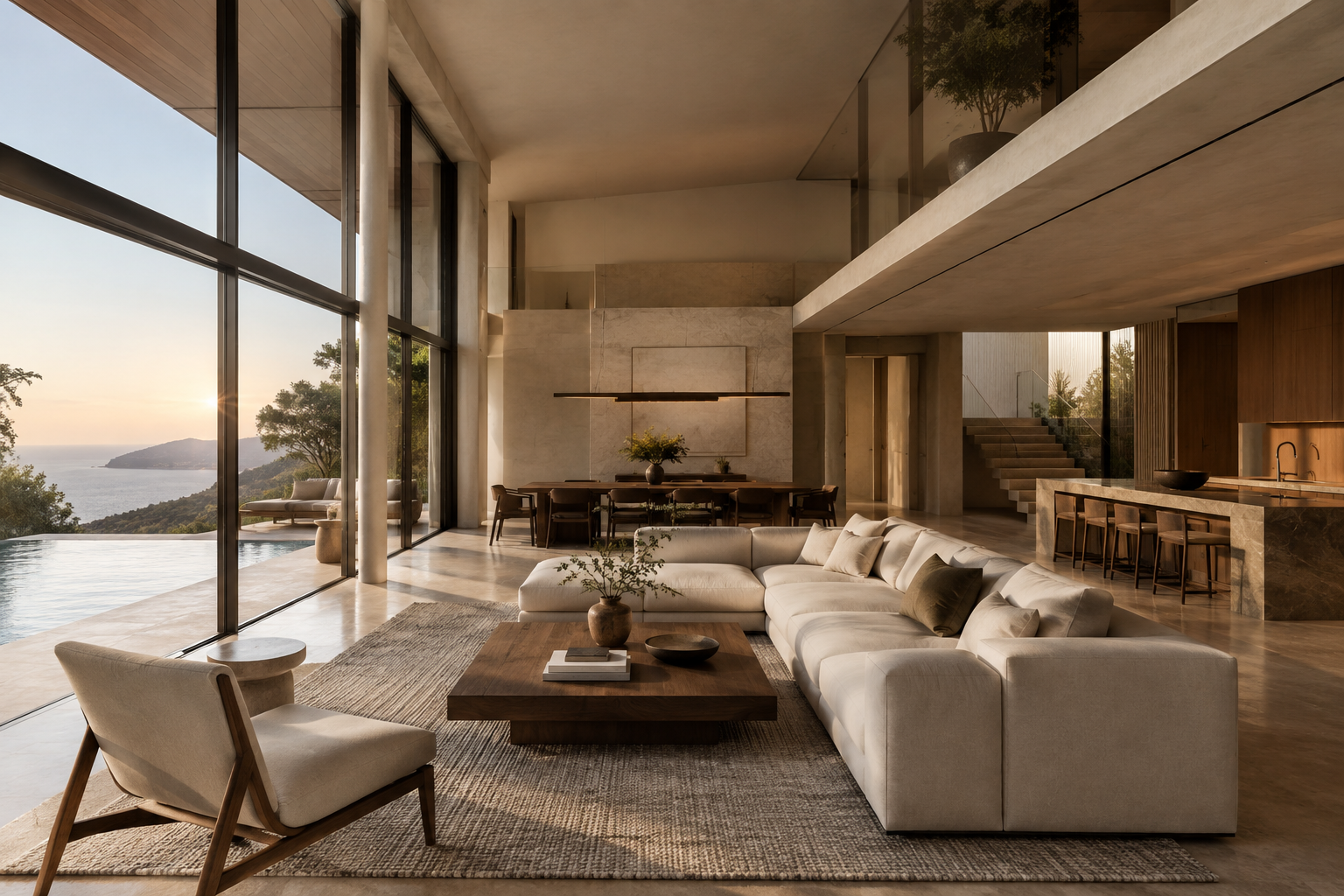
In high-end architecture and interior design, luxury is increasingly being defined by what is left out rather than what is added, and proportion sits at the heart of this approach. Sophisticated residential design is placing greater emphasis on scale, light, and the feeling of space over surface decoration.
A beautifully designed home does not need to be filled with expensive furniture or dramatic finishes to feel luxurious. Instead, luxury home design begins with the architecture itself.
Generous ceiling heights, carefully considered room proportions, framed views, and thoughtful circulation can create a sense of calm and permanence that decoration alone cannot achieve. These fundamental architectural decisions shape how a space feels from the moment you step inside.
Why Proportion Shapes Our Experience of Space
The relationship between the width, length, and height of a room determines whether it feels balanced or uncomfortable. When these dimensions work together harmoniously, a space feels instinctively right, even if the reason is not immediately obvious.
This is not about applying rigid formulas. It is about understanding how people move through and occupy a room, and shaping the architecture accordingly.
A well-proportioned living room, for example, allows furniture to be arranged naturally without forcing layouts or creating awkward leftover spaces. The ceiling height relates comfortably to the floor area, so the room feels neither oppressively low nor uncomfortably vast.
Similarly, the size and placement of windows should correspond to the scale of the room. A large opening in a small room can feel unbalanced, while undersized windows in a generous space can make it feel closed off and disconnected from the landscape.
The Role of the Architect in Creating Balance
This is where the expertise of a registered architect becomes particularly valuable. Working with a qualified professional registered with the NSW Architects Registration Board ensures that these spatial relationships are considered from the earliest stages of design.
The relationship between rooms, openings, furniture, materials, and natural light must be considered as one cohesive composition. When these elements are properly balanced, even relatively restrained interiors can feel exceptionally refined.
An architect brings a trained eye to these questions. They understand how to manage transitions between spaces, how ceiling heights affect acoustics and comfort, and how the proportion of solid wall to glazing influences both thermal performance and the character of a room.
At Maya Sternberg Architects, we approach each project by first understanding how our clients live and what they value in their home. Only then do we begin shaping spaces that support those priorities through careful architectural planning.
Materiality and Restraint in Residential Design
Materiality plays an important role too, but it works best when applied with restraint. A single carefully selected stone, timber species, or textured finish can have more impact than a collection of competing materials.
The objective is not to make every element stand out, but to ensure that everything belongs together. This approach allows the architecture itself to remain legible, rather than being obscured by layers of decoration.
Natural materials age gracefully and develop character over time. A well-detailed timber floor or stone benchtop becomes more beautiful with use, rather than looking tired or outdated.
Restraint also creates longevity. Rather than designing around short-lived trends, homeowners are increasingly choosing spaces with strong architectural foundations that can evolve naturally over time.
A restrained material palette also simplifies decision making during construction and helps maintain budget discipline. Fewer materials means more opportunity to select higher quality finishes where they matter most.
Space, Light, and the Quality of Everyday Living
Light is one of the most powerful tools available to an architect, and its quality is directly influenced by the proportion of the spaces it enters. A room with balanced dimensions allows light to move through it evenly, creating a comfortable, animated interior that changes throughout the day.
Natural light should not simply flood a space indiscriminately. It should be controlled, filtered, and directed to enhance the way a room is used and to highlight particular materials or views.
High-level clerestory windows can bring light deep into a plan without compromising privacy. Carefully placed skylights can illuminate circulation spaces or bathrooms that would otherwise feel enclosed.
The play of light and shadow across a textured wall or timber ceiling adds depth and interest without requiring any additional decoration. These effects are only possible when the architecture has been designed with intention.
Equally important is the quality of space between rooms. Circulation areas should not feel like leftover corridors, but rather like part of the overall spatial experience. A generous hallway or landing can become a gallery for art, a reading nook, or simply a place to pause.
Designing for Longevity and Comfort
True luxury in residential architecture is not about excess. It is about designing homes that feel effortlessly comfortable and work beautifully for the people who live in them.
This requires thinking beyond immediate aesthetics to consider how a home will function over decades. Rooms should be flexible enough to accommodate changing needs without requiring major renovation.
Details matter, but they should be considered rather than fussy. Joinery should be clean and well-proportioned, door hardware should feel solid and satisfying to use, and skirting profiles should relate logically to the scale of the room.
When these elements are resolved carefully, the result is a home that feels cohesive and thoughtfully made. The architecture supports daily life without drawing constant attention to itself.
Ultimately, the hallmark of exceptional luxury interior design is not how much a space contains, but how effortlessly it works. True luxury is space that feels considered, comfortable, and timeless.
If you are thinking about a new home or renovation and would like to discuss how thoughtful architectural planning can create spaces with enduring quality, we would welcome the opportunity to talk with you about your project at Maya Sternberg Architects.