
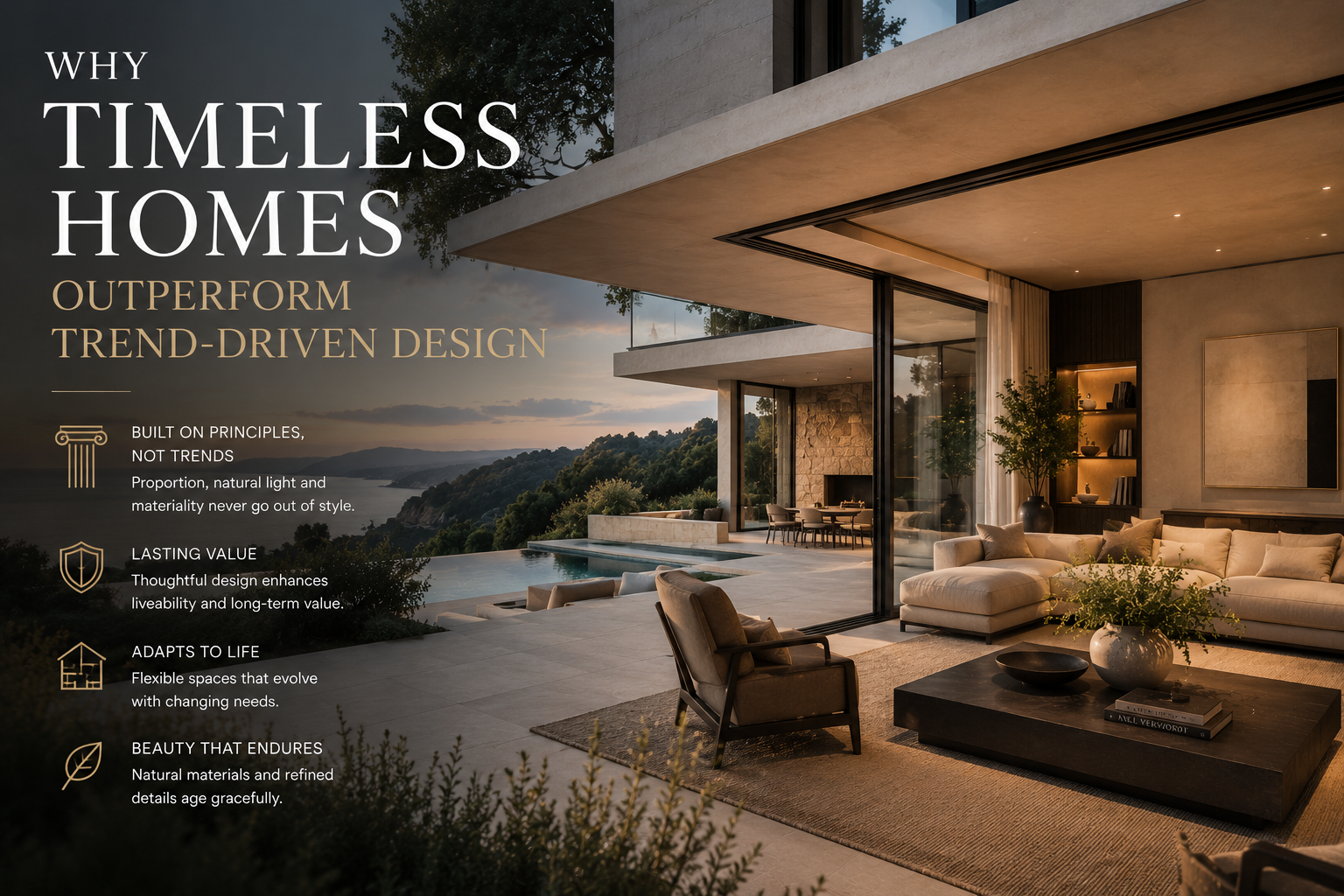
Creating timeless homes requires more than following design trends or selecting popular finishes. In an era of endless inspiration and rapidly changing aesthetics, one question has become increasingly important in luxury architecture and interior design: will this home still feel exceptional ten years from now?
The most valuable homes are rarely the most trend-driven. Instead, they are the result of disciplined design decisions that prioritise longevity, functionality, and enduring appeal.
Why Timeless Homes Create Lasting Value
While trends can inspire, timeless architecture creates lasting value. This distinction matters because homes represent significant personal and financial investment, and the way they age reflects the quality of thinking behind them.
Today’s leading high-end residential architecture projects are moving away from highly specific finishes and short-lived styles in favour of spaces built around proportion, natural light, material integrity, and adaptability. These are the foundations that allow a home to remain relevant long after trends evolve.
A well-designed home should not feel dated after a decade. It should continue to support the life lived within it, respond to changing needs, and hold its aesthetic and functional integrity over time.
The Design Foundations That Endure
Timeless homes begin with clarity around spatial relationships and architectural proportion. Before considering finishes or styling, the underlying structure must offer balanced rooms, generous natural light, and thoughtful circulation.
These fundamentals are rarely visible in a magazine photograph, but they define how a space feels to inhabit. A room with good proportions will always feel more comfortable than one relying on decoration to compensate for poor spatial planning.
Natural light plays a central role. Homes that capture morning sun in living spaces, frame views deliberately, and manage privacy without sacrificing brightness tend to age far better than those dependent on artificial intervention or decorative distraction.
Working with a registered architect ensures these principles are considered from the earliest planning stages. The best design decisions happen before construction begins, not as afterthoughts during styling.
Materials That Age With Dignity
In luxury interior design, timelessness does not mean traditional or predictable. It means selecting materials and details that age beautifully and maintain their character over time.
Natural stone, architectural timber, bespoke joinery, and layered lighting continue to outperform fashionable choices because they create depth and permanence. These materials develop a patina rather than showing wear, and they offer tactile richness that synthetic alternatives cannot replicate.
The discipline lies in restraint. Timeless homes tend to use a limited palette of high-quality materials rather than mixing multiple finishes for visual interest. This creates coherence and allows each material to be appreciated on its own terms.
Joinery, in particular, offers an opportunity for enduring quality. Custom cabinetry that integrates seamlessly with architecture, uses solid timber construction, and includes considered detailing will outlast any mass-produced alternative both functionally and aesthetically.
Flexibility and the Ability to Adapt
Another hallmark of enduring design is flexibility. The best custom home design anticipates change, whether that means evolving family needs, hybrid lifestyles, or future technology integration.
Homes that adapt gracefully tend to retain stronger emotional and financial value. This might mean designing rooms that can shift function over time, incorporating flexible storage systems, or ensuring spaces can accommodate different furniture arrangements without losing their coherence.
Our services focus on understanding how clients live now and how their needs might evolve. A guest room might become a home office, a playroom might transition into a study, or a garage might need to accommodate electric vehicle charging.
Designing for adaptability does not mean creating generic spaces. It means building in an underlying robustness that allows surface changes without requiring structural intervention. The architecture itself remains constant while the life within it evolves.
Shifting From Appearance to Investment
This approach ultimately shifts the conversation from appearance to investment. Great design is not measured by how current it feels today, but by how effortlessly it continues to support life tomorrow.
Timeless homes resist the pressure to respond to every aesthetic movement. They are grounded in principles that have proven their worth across decades: good proportion, quality materials, careful detailing, and spatial generosity.
The future of modern luxury homes belongs to architecture that resists expiration and rewards thoughtful decision-making over time. These homes do not shout for attention or rely on novelty. They offer something more valuable: the confidence that comes from knowing a design will remain relevant.
In practice, this means making fewer but better decisions. It means investing in architectural quality rather than decorative appliqué. And it means recognising that enduring appeal comes from depth, not surface.
The most successful residential architecture balances individual character with restrained elegance. It responds to site and context without imitating historical styles. And it creates spaces that feel both specific to their owners and free from overt stylistic markers that date quickly.
Timeless homes are not the result of avoiding risk. They come from understanding which risks are worth taking and which trends are better left to others. They reflect a commitment to longevity, quality, and the belief that good design continues to give value long after construction is complete.
If you are considering a residential project and would like to discuss how enduring design principles might apply to your home, we would be pleased to talk. You can learn more about our approach and get in touch through our practice page.